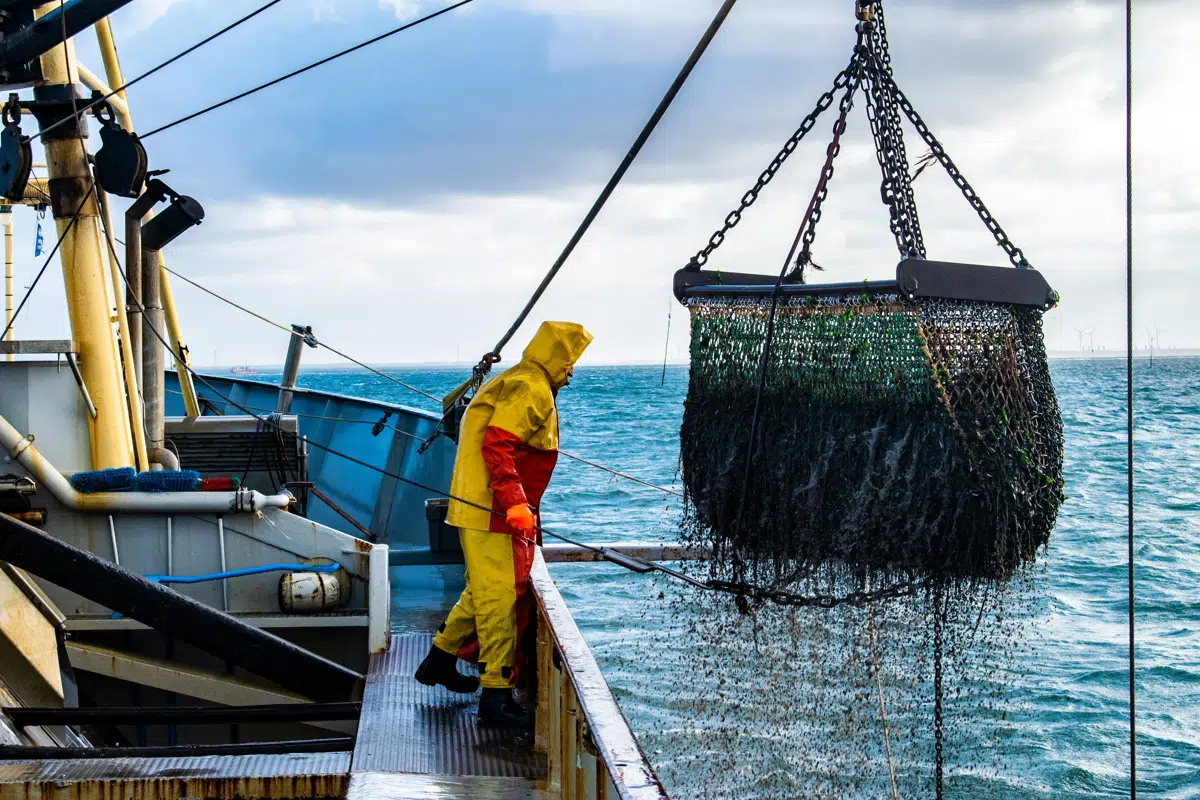
Where the knife and the freezer meet your catch (on the vessel or at the plant) shapes the product China receives and the registration pathway behind it.
At sea: quality locked at harvest
Factory and freezer vessels head, gut, grade and flash-freeze within hours of the haul. The result, frozen-at-sea (FAS), is a recognized quality tier in the Asian trade, prized because peak freshness is captured before transit begins. Deep-water groundfish is the classic case: turbot / Greenland halibut heading to China is very often FAS. Buyers value the consistency and frequently reprocess in China, which makes lot-to-lot uniformity as important as freshness. More: at-sea processing.
Onshore: form to the buyer’s exact spec
Shore plants take landed catch to the precise form ordered (whole, head-and-gutted, sections, fillets, portions) with grading, packing, marks and cold storage under one roof. This is where the buyer’s spec sheet gets met: size tiers, roe grades, presentation. The rule that surprises first-timers: whole and minimally-processed is often worth more in this market. Confirm the form before cutting. More: onshore processing.
The registration angle
Both routes end at the same gate: product must trace to registered establishments. Shore plants carry SFC licensing and GACC registration; at-sea product involves vessel and establishment registration considerations of its own, and China’s labelling rules expect every production step, including vessels, identified. Neither route is exempt; they’re just documented differently.
Which is “better”?
Neither; they serve different products and buyers. Deep-water groundfish for reprocessing: at-sea shines. Precise banquet-spec presentation and roe grading: that’s a shore plant’s game. Many supply chains use both.
What matters is that the route, the form and the paperwork agree with what the buyer ordered. That agreement is our job. The full export pathway.